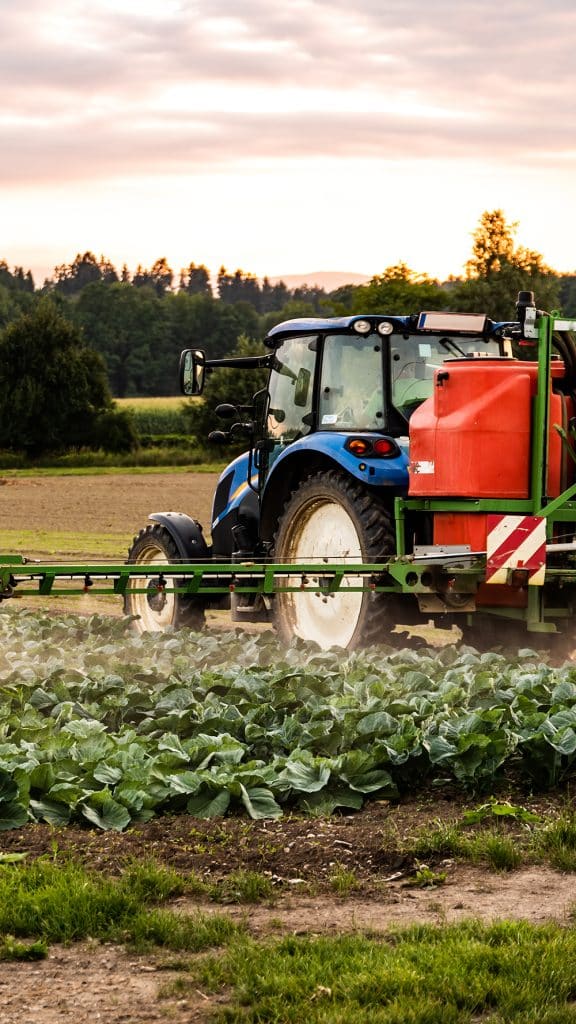
A grain farmer in the Free State budgeted for a new 150hp tractor at the start of 2026. The plan made sense in December — a strong harvest, reasonable forward cover on maize, and a dealership offering competitive terms. By March, the calculation had changed. Grain prices softened further, input costs held firm, and the rand added its own pressure to every imported component in the machine he was considering.
He shelved the new purchase and opened the pre-owned market for the first time in four years.
His question was straightforward: is this a good time to buy used, or has everyone else had the same idea and pushed prices up?
This article answers that question — and its mirror, for sellers wondering what the same conditions mean for their listings.
What the SAAMA Numbers Actually Show
South Africa’s agricultural machinery market recorded 14 consecutive months of growth before March 2026 delivered a notable correction. Tractor sales fell 8% year-on-year in March, with 618 units sold against 671 in the same month the previous year. Combine harvester sales fell more sharply — 22% down, at 29 units against 37 the prior year.
Read in isolation, those numbers look significant. Read in context, they require more care.
Year-to-date figures through March 2026 remain positive. Tractor sales are running 2% ahead of the prior year; combine harvesters are 6% ahead. January and February were unusually strong — strong enough, in the view of Grain SA’s applied economics head, to make March’s decline more predictable than alarming. The full-year industry estimate points to 2026 tractor volumes landing similar to, or marginally below, 2025 — not a collapse, but a plateau following an extended run.
SAAMA’s chairperson identified low grain prices as the primary pressure point, with rising diesel and fertiliser costs compounding the squeeze on producer margins. The Agbiz chief economist has cautioned against over-interpreting a single month’s data after 14 months of above-average performance, noting that sales remain well above long-term averages.
The picture is not a market in distress. It is a market pausing to recalibrate — and that pause has specific implications for anyone buying or selling pre-owned equipment in the second half of 2026.
A single month of declining sales is not a trend. But it is a signal worth understanding before placing or pricing a listing.
How New-Market Contractions Transmit to the Pre-Owned Segment
The connection between new machinery sales and the pre-owned market is not direct, but it is consistent.
When new tractor demand softens, dealerships typically see trade-in volumes increase as they work to move new metal off their floors. Dealers offering aggressive OEM financing deals — Case IH South Africa, for example, is currently running promotional terms at Prime minus 3.5% with first repayments deferred 365 days — are competing for buyer capital, and one tool they use to close deals is accepting trade-ins at prices that keep the overall transaction attractive. Those trade-ins enter the pre-owned market.
Simultaneously, farmers who planned to upgrade their fleets defer the decision. They hold their current machine longer, which reduces the volume of privately sold pre-owned equipment entering the market — but also reduces active pre-owned demand, because the upgrading farmer is no longer shopping.
The net directional effect: pre-owned inventory tends to widen during new-market softness, motivated sellers become more negotiable, and buyers with capital ready to deploy find themselves in a stronger position than they occupied twelve months ago.
This is not a universal rule — it plays out differently by machine category, age bracket, and regional demand. But it is the directional pressure a pre-owned buyer should factor into their approach right now.
When OEM finance arms compete aggressively for new machinery volume, pre-owned sellers are competing with those offers. Buyers know it. Pricing should reflect it.
What This Means for Pre-Owned Buyers
The pre-owned buyer entering the market in the second half of 2026 is operating in conditions that favour careful, evidence-based purchasing. The opportunity is real — but it is category-specific.
Mid-range tractors in the 100hp–160hp bracket, where new-sale deferrals are highest among commercial grain farmers, are the most likely segment to see inventory widening and motivated seller behaviour. Late-model combines where new-purchase decisions have been shelved are similar. These are the categories where a prepared buyer with finance in place and a clear technical brief will find the most negotiating room.
Specialist implements — planters, precision sprayers, livestock handling systems — are less directly affected by new-tractor market dynamics. Demand for these assets is driven by operational need rather than fleet upgrade cycles, and supply tends to remain tighter. Sub-60hp utility tractors, which serve a broad and perennial demand base across horticulture, smallholding, and mixed operations, also see less movement from commercial market fluctuations.
Use current OEM promotional financing rates as a reference anchor in pre-owned negotiations. If a dealership is offering a comparable new machine at Prime minus 3.5% deferred for 365 days, that offer defines the ceiling of a pre-owned buyer’s willingness to pay for a late-model used alternative. Sellers who do not understand this dynamic will price themselves out of consideration without realising why.
| Machine Category | Likely Pre-Owned Market Condition — H2 2026 | Recommended Buyer Posture |
|---|---|---|
| Mid-range tractors (100hp–160hp) | Widening inventory, motivated sellers likely | Active — negotiate firmly, move with evidence |
| High-horsepower tractors (160hp+) | Moderate supply, selective demand | Selective — condition and hours matter more than price alone |
| Combine harvesters | Tighter supply despite new-sale deferrals — combines are held longer | Patient — good units move quickly when priced correctly |
| Self-propelled sprayers | Stable supply, consistent demand | Standard — preparation quality determines transaction speed |
| Specialist implements and planters | Tight supply, need-driven demand | Move quickly on quality units — negotiating room is limited |
| Sub-60hp utility tractors | Perennial demand, limited market sensitivity | Standard — price anchored to condition and hours |
For buyers considering the financial structuring of a pre-owned purchase, ProFarm’s analysis of Section 12B and asset financing remains directly relevant — the tax treatment of pre-owned agricultural equipment under Section 12B applies regardless of whether the asset is new or used.
What This Means for Pre-Owned Sellers
The seller’s position in this market requires clear thinking about who is actually buying.
Farmers deferring new purchases are not leaving the market. They are re-entering it as pre-owned buyers with the same capital budget they originally allocated — and with the same technical expectations. A farmer who was prepared to spend R850,000 on a new tractor and has now shifted to the pre-owned market is not a bargain hunter. He is a serious buyer with high standards, financing in place, and a clear understanding of what OEM promotional deals are offering as an alternative.
Sellers of late-model, low-hour machinery face the most direct competition from those OEM deals. The buyer comparing your three-year-old tractor to a new equivalent being offered at Prime minus 3.5% with a 365-day payment deferral is making a sophisticated calculation. Your machine needs to offer a meaningful price differential, a clean documentation file, and a presentation quality that removes every reason to hesitate. This is precisely the territory covered in ProFarm’s pre-listing preparation guide — the R40,000–R60,000 realisation gap between a prepared and unprepared listing does not shrink in a softening market. It widens.
Sellers of older, higher-hour equipment face a different dynamic. OEM promotional deals are not their direct competition — buyers for these machines are typically working within tighter capital constraints and are not choosing between new and used. But buyer caution in a margin-pressured farming environment means more rigorous price interrogation, more requests for service records, and longer decision timelines. Pricing discipline and documentation quality are the primary levers available.
In a market where buyers have more options than they did twelve months ago, presentation quality is no longer a courtesy. It is a pricing mechanism.
The Grain Price and Input Cost Context
The machinery market softness of early 2026 is a symptom of farm-level profitability pressure, not a structural exit from the equipment market. Farmers are deferring capital decisions, not abandoning farming.
This distinction matters for how sellers should interpret buyer behaviour. A buyer who takes three weeks to respond, asks detailed questions about service history, and requests a second viewing is not a time-waster. He is a careful operator managing his cash flow in a tight margin environment. The buyers active in this market are serious. They are simply more deliberate than they were during the commodity-price peaks that drove 14 consecutive months of new machinery sales growth.
Sellers who treat deliberate buyers as disengaged will lose transactions that were there to be closed with a little patience and a complete information package.
Reading the Cycle
South Africa’s agricultural machinery market moves in cycles shaped by commodity prices, input costs, currency, and rainfall. The current softness follows an extended period of above-average sales — which means the fleet across many commercial operations has been recently upgraded, reducing urgency on the buy side.
Farmers who acquired well-maintained pre-owned equipment during the last prolonged market softness entered the subsequent commodity recovery better capitalised than those who waited. They paid less for assets that performed identically in the field. This is not a prediction about what commodity prices will do in 2027. It is a pattern in how machinery market cycles interact with farm balance sheets.
The farmers who benefit most from a softening market are those who move with a clear technical brief, verified financing, and enough market understanding to recognise a well-priced asset when they find one. For current SAAMA monthly sales data, the full figures are published at saama.co.za.
The Free State Farmer’s Answer
The Free State farmer who shelved his new tractor purchase is not in a bad position. He is in a well-informed one — if he understands what the market is telling him.
The pre-owned segment in the second half of 2026 will reward buyers who move with evidence: clear technical requirements, verified financing, and the discipline to negotiate from market data rather than emotion. It will reward sellers who price with discipline: realistic valuations, complete documentation, and presentation quality that removes the uncertainty buyers are currently priced to avoid.
The farmers on the wrong side of both equations will either overpay or under-realise. The farmers on the right side will close transactions that the market is currently making available.
To browse current pre-owned listings, visit profarm.co.za/buy-equipment/. To list machinery for sale, visit profarm.co.za/sell-equipment/.