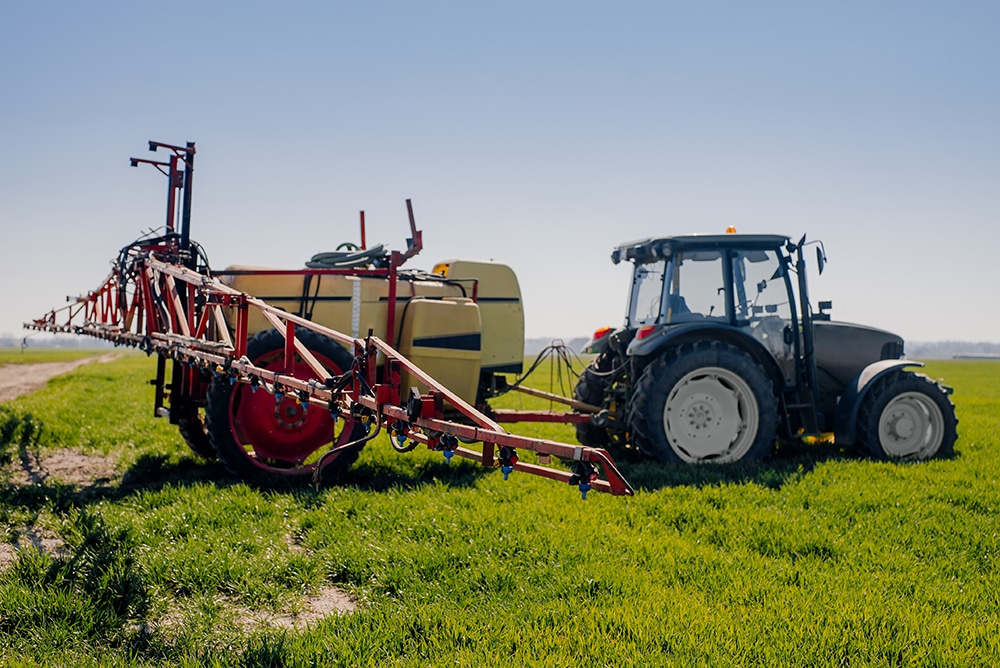
A grain and soybean farmer in Mpumalanga lost his combine harvester to a fire during the 2025 harvest. The machine had been financed at purchase four years earlier and insured at that point without further review. When the claim was assessed, the insurer calculated the market value of the combine at the time of the loss — not the amount the farmer believed it was worth, and not what it would cost to replace it.
The payout was R380,000 less than the farmer’s own estimate of the machine’s value.
It was also R210,000 less than the outstanding finance settlement on the combine.
The machine was gone. The debt remained. The farmer owed the bank R210,000 on an asset that no longer existed, and had no legal recourse — because his policy had worked exactly as written. He simply had not read it carefully enough to understand what he had agreed to.
This outcome is not unusual. It is the predictable result of a policy structure that most South African farmers have never interrogated — and that most brokers do not explain until a claim makes the explanation necessary.
The Two Policy Types Every Machinery Owner Must Understand
Short-term insurance for agricultural machinery in South Africa is structured around two fundamentally different value mechanisms. Understanding the difference before a claim is one of the most financially significant decisions a machinery owner can make.
Agreed Value
Under an agreed value policy, the insurer and the policyholder establish a fixed sum at policy inception. If the asset is written off, stolen, or suffers a total loss, the insurer pays that agreed amount in full. No depreciation deduction is applied at claim time. The agreed figure is what the farmer receives.
To establish an agreed value, the insurer typically requires justification — a purchase invoice, a dealer valuation certificate, or a formal assessment from a recognised agricultural valuer. Once accepted, that figure is locked in for the policy period.
A farmer insures a 2019 combine at an agreed value of R1,200,000. Four years later, the machine is destroyed by fire. The insurer pays R1,200,000. The outstanding finance balance of R480,000 is settled. The farmer receives the balance to fund a replacement.
Market Value
Under a market value policy, the insurer pays what the asset would have fetched in an arm’s-length sale on the open market on the day of the loss. That figure is determined by the insurer’s assessor at the time of the claim — not at the time the policy was written, and not based on the farmer’s own estimate.
The same 2019 combine, insured under a market value policy, is assessed at R820,000 by the insurer’s depreciation schedule four years after purchase. The outstanding finance balance is R480,000. The farmer receives R340,000 net of the settlement — not R720,000 as he had assumed. The machine’s replacement costs R1,400,000 in current rand terms.
The gap between what the farmer expected and what the policy delivered is the market value problem. It compounds every year the policy is not reviewed.
The difference between agreed value and market value is not a technical distinction. It is a financial exposure that widens every season a policy sits unreviewed.
The Average Clause — The Mechanism Most Farmers Have Never Read
The agreed value vs. market value distinction affects total loss claims. The average clause affects partial loss claims — and partial losses are far more common than write-offs.
Most South African short-term insurance policies contain an average clause, also called a co-insurance clause. It operates as follows: if the sum insured on a policy is lower than the actual value of the asset, the insurer treats the farmer as a co-insurer for the uninsured portion. Partial claim payouts are then reduced proportionally.
A concrete example. A farmer insures a tractor for R400,000. The tractor’s actual market value at the time of the claim is R600,000 — it has not depreciated as much as the insured figure assumed, because rand weakness has pushed up replacement costs. The tractor sustains R200,000 in accidental damage. The farmer expects a R200,000 payout.
The average clause calculation: R400,000 (sum insured) divided by R600,000 (actual value) equals 66.7%. The insurer pays 66.7% of the R200,000 claim — R133,333. The farmer absorbs the remaining R66,667 personally, despite holding an active insurance policy.
This mechanism is written into the standard policy wording. It is not a claims department discretion. It applies automatically when under-insurance is identified at assessment.
Under-insurance does not simply reduce a total loss payout. It reduces every partial loss claim by the same proportional shortfall — including the repairs a farmer expects to be fully covered.
The Finance Settlement Gap
Farmers who financed their machinery purchase carry a specific insurance risk that deserves separate attention.
When a financed asset is written off, the insurer pays the assessed value directly to the financier first, to settle the outstanding loan balance. If the insurance payout is lower than the outstanding balance — which is precisely what happens under a market value policy on a recently financed machine in a depreciated rand environment — the farmer owes the financier the difference personally.
This is the agricultural equivalent of negative equity insurance: the asset is gone, the policy has paid out, and the farmer still has a debt.
The risk is highest in the first three years of a finance agreement, when the outstanding balance is largest relative to the asset’s market value trajectory. It is compounded by rand depreciation and import cost inflation, which push replacement costs upward while insurer depreciation schedules push assessed market values downward.
Farmers who have structured their fleet acquisitions tax-efficiently — as covered in ProFarm’s analysis of Section 12B and asset financing — should ensure that insurance structure forms part of the same planning conversation. A well-structured finance agreement and a poorly structured insurance policy are not financially coherent together.
The finance settlement gap is not discovered at purchase. It is discovered after a fire, a theft, or a rollover — when there is nothing left to do about it.
What Drives Insured Value — and How to Defend It
The insured value on a machinery policy is only as defensible as the documentation behind it. This is true at policy inception, when establishing an agreed value, and at claim time, when challenging a market value assessment.
| Documentation Type | What It Establishes | Insurance Relevance | How to Obtain It |
|---|---|---|---|
| Original purchase invoice | Acquisition cost and specification at purchase | Baseline for agreed value calculation at inception | Retain from purchase transaction |
| Dealer valuation certificate | Current market value from a recognised equipment dealer | Primary tool for agreed value negotiation and claim challenge | Request from an authorised dealer or machinery specialist |
| Auction house valuation | Recent comparable sale prices for equivalent assets | Market evidence to challenge a low insurer assessment | Request from a reputable agricultural auction house |
| Service history records | Maintenance standard and mechanical condition | Supports higher valuation by evidencing above-average care | Compile from logbooks and dealer invoices |
| Oil analysis report | Internal mechanical health at a specific date | Provides forensic evidence of condition beyond visible inspection | Commission from a laboratory — as covered in ProFarm’s oil analysis guide |
| Recent comparable listings | Current asking prices for equivalent machines | Market context for value discussions with insurer or broker | Document from active marketplace listings at time of valuation |
The same documentation rigour that protects a buyer at purchase — service records, inspection reports, oil analysis — protects an owner at claim time. An asset with a complete documentation file is easier to value accurately, easier to insure at an agreed figure, and easier to defend when an insurer’s assessor produces a number that does not reflect the machine’s actual condition.
Annual Review — Why the 2021 Insured Value Is Wrong in 2026
Agricultural machinery replacement costs in South Africa have increased materially since 2021. Rand depreciation, global supply chain disruption, and rising import costs have pushed the rand price of new and near-new machinery significantly higher than the figures that appeared on purchase invoices four or five years ago.
A tractor purchased in 2021 and insured at that year’s purchase price under a market value policy is almost certainly under-insured in 2026 terms — not because the machine has appreciated, but because its replacement cost has increased while the sum insured has remained static.
Annual policy review is not an administrative formality. It is the mechanism through which under-insurance is identified and corrected before a claim makes it irreversible. The review should include a current market valuation of each significant asset, a comparison of that valuation against the current sum insured, and a conversation with the broker about whether an agreed value policy is more appropriate than the existing structure.
The cost of a dealer valuation certificate is measured in hundreds of rands. The cost of discovering under-insurance at claim time is measured in hundreds of thousands.
Practical Questions to Ask Your Broker at Renewal
Before signing the next renewal schedule, put these questions to your broker directly:
- Is each piece of machinery covered on an agreed value or a market value basis? If the answer is market value, ask what depreciation schedule the insurer applies and what the current assessed value of each asset would be.
- Does the policy contain an average clause? If yes, ask how the co-insurance calculation would apply to a partial loss on each major asset at its current sum insured.
- What documentation does the insurer require to establish an agreed value? A dealer valuation certificate is typically sufficient — confirm the format and recency requirement.
- If a financed asset is written off, how does the settlement sequence work? Confirm whether the payout goes to the financier first and what happens if the payout is less than the outstanding balance.
- When was each asset’s sum insured last reviewed against current market value? If the answer is at inception, that review is overdue.
- What perils are excluded for agricultural machinery on this policy? Confirm specifically whether flood and hail damage to machinery are covered — these are not standard inclusions on all agricultural policies.
A broker who cannot answer these questions clearly is not the right broker for a commercial farming operation carrying significant machinery values.
The Conversation That Cost Nothing
The Mpumalanga farmer whose combine fire left him with a R210,000 bank debt reviewed his remaining policies the following month. His agronomist connected him with a machinery dealer who provided current valuation certificates for his three tractors and his remaining combine. His broker restructured all four policies onto agreed value terms.
The total cost of the valuation certificates was R2,400. The broker restructuring conversation took forty minutes.
The premium increase for agreed value cover on all four machines was R8,700 per year.
Against the R210,000 shortfall he had just absorbed personally — on a machine that no longer existed — the cost of the review he had not done was precise and permanent.
The review that would have prevented it cost nothing except the decision to have it.
If you are buying, selling, or currently holding pre-owned agricultural machinery and need current market valuation support, visit profarm.co.za or contact a ProFarm agent directly. A current, documented valuation is the foundation of both a defensible insurance policy and a credible listing price.
This article provides general financial and insurance education for agricultural contexts and does not constitute financial advice. Consult a registered short-term insurance broker for advice specific to your circumstances and policy wording.