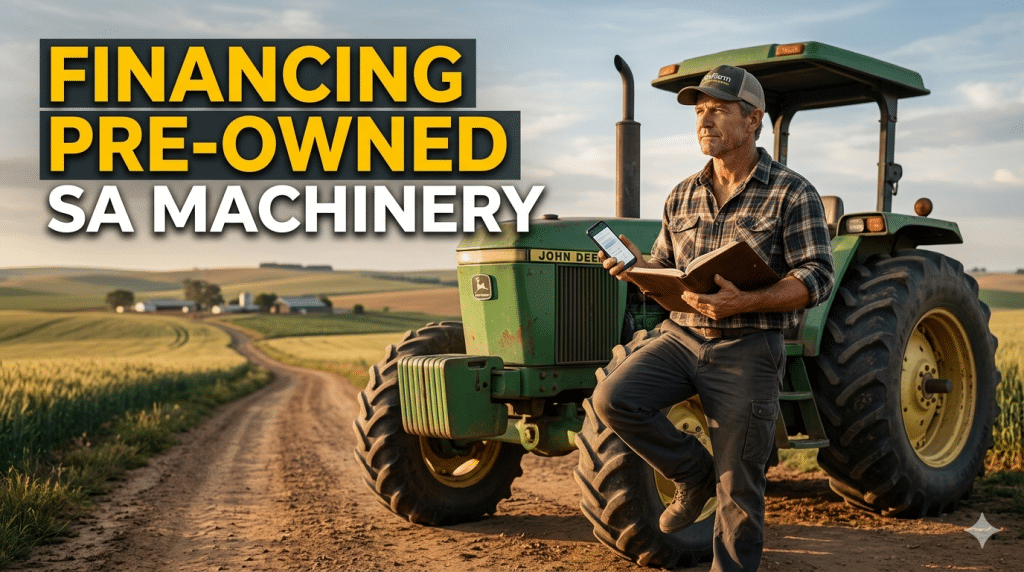
Meet Pieter, a commercial maize and soybean producer in the North West. Over the last three seasons, erratic weather, soaring fertiliser prices, and a prime lending rate stubbornly sitting at 10.25% have pushed his operating margins to the brink. Right as land preparation approached, his trusty 12-year-old primary tractor suffered a catastrophic gearbox failure.
A brand-new replacement model? Upwards of R3.5 million. But Pieter did what a growing number of savvy South African producers are doing in 2026: he turned his attention to the pre-owned machinery market.
Sourcing a meticulously maintained, 4,000-hour pre-owned tractor wasn’t just a reluctant budget choice for Pieter—it was a strategic cash-flow decision. However, while a pre-owned machine comes with a vastly reduced price tag, pulling R1.2 million out of your operational reserves is rarely an option.
So, how do you finance high-quality pre-owned mechanisation without suffocating your farm’s liquidity? Here is a breakdown of the realities of agricultural asset finance in South Africa for 2026, comparing traditional loans, leases, and smart repayment strategies.
The 2026 Reality: Profitability Over Mere Survival
Historically, farm resilience in South Africa was measured by a producer’s ability to survive a drought cycle. Today, resilience is measured by cash flow and profitability.
Financial institutions are increasingly shifting their focus away from merely looking at the strength of a farm’s balance sheet to heavily scrutinising its immediate cash-flow capabilities and ability to repay debt. Because of this, tying up massive amounts of capital in brand-new, depreciating machinery can make securing operational bridging finance later in the season incredibly difficult. Pre-owned machinery drastically lowers the debt burden, freeing up capital for critical inputs like seed, diesel, and agrochemicals.
Traditional Agricultural Loans vs. Equipment Leasing
When looking to finance a used combine harvester, planter, or tractor, South African farmers generally choose between two primary mechanisms: traditional instalment sale agreements (asset finance) and equipment leasing.
1. Traditional Asset Finance (Instalment Sale Agreements)
Financing through major agricultural desks at banks like WesBank, Standard Bank, Nedbank, or Absa remains the most common route. The bank purchases the equipment and sells it to you over an agreed period (usually 36 to 60 months).
The Pros:
- Ultimate Ownership: Once the final instalment is paid, the machine is yours. It becomes a paid-up asset on your balance sheet that you can trade in or use as collateral later.
- Customisable Terms: Banks frequently offer variable or fixed interest rates, allowing you to lock in your repayment costs if you fear interest rates will spike.
- Depreciation Benefits: The South African Revenue Service (SARS) allows farmers to claim wear-and-tear allowances on capital assets, offering a vital tax shield.
The Cons: - Strict Approval Criteria: Banks are risk-averse. They will require detailed financial records, soil yield histories, and off-take agreements before approving a loan on pre-owned gear.
- Age Limits: Banks typically refuse to finance equipment older than 10 years, meaning vintage or highly aged pre-owned machinery won’t qualify.
2. Equipment Leasing (Rent-to-Own)
Leasing is gaining massive traction in the South African agricultural sector. Instead of buying the asset outright, you pay a fixed monthly or seasonal rental fee to use the machinery. At the end of the term, you often have the option to purchase the equipment for a residual value, hand it back, or upgrade to a newer pre-owned model.
The Pros:
- Off-Balance Sheet Financing: Because you don’t own the asset immediately, the debt does not clog up your balance sheet, keeping your credit lines open for production loans.
- Tax Efficiency: Lease payments are entirely tax-deductible as an operating expense (OPEX) rather than a capital expense (CAPEX).
- Lower Initial Capital: Leases often require smaller deposits compared to traditional loans.
The Cons: - Higher Long-Term Cost: You might pay slightly more over the life of the lease than you would on a standard loan.
- Usage Limitations: Some leasing agreements have strict clauses regarding maximum operating hours per year.
Cash Flow Strategies: Structuring Debt to Suit Your Season
The biggest mistake farmers make when financing machinery is agreeing to standard monthly repayments when their income is strictly seasonal. In 2026, protecting cash flow requires structuring your debt around your harvest and auction cycles.
- Annual or Bi-Annual Repayments: If you are a cash-crop farmer, negotiate with your financier to align your instalments with your harvest window. Paying a lump sum once a year (e.g., in July after the maize harvest) prevents the stress of finding cash during the expensive planting months.
- The “Payment Holiday” Strategy: Work with agricultural financiers who understand the cyclical nature of farming. Many banks now offer structured payment holidays during periods of the year when input costs (like diesel and fertiliser) peak, easing the monthly financial strain.
- Residual Value (Balloon Payments): If you opt for an instalment sale, a balloon payment can significantly reduce your regular instalments. By agreeing to pay a large lump sum at the end of the 60-month term, you free up cash flow today. Just ensure you have a strategy to settle the balloon—such as trading the tractor in or saving profits during bumper years.
The Marketplace Advantage: Why Where You Buy Matters
Banks view pre-owned equipment through a lens of risk. If you find a cheap tractor on Gumtree or a local Facebook group, securing bank finance is going to be an uphill battle. Private sales are fraught with hidden mechanical faults, fraudulent paperwork, and inflated pricing.
This is where reputable agricultural marketplaces and vetted dealerships are essential.
When you purchase through a trusted platform like ProFarm Intelligence, you drastically improve your chances of financing approval. Here is why:
- Verified Sellers: Financiers trust dealerships and vetted networks. It mitigates the risk of fraud or stolen goods.
- Market Value Transparency: Banks will only finance what the machine is actually worth (Market Value), not what a private seller feels it is worth. Reputable platforms ensure pricing is aligned with current market data.
- Mechanical Soundness: A documented service history and comprehensive inspection reports mean the bank knows they are financing a working asset, not a rusted liability that will default on the loan.
Conclusion
Upgrading your mechanisation fleet doesn’t have to drain your operating capital. By pivoting to the pre-owned market and structuring your financing to match the realities of your farm’s cash flow, you can stay competitive and profitable in 2026.
Whether you choose a traditional instalment sale aligned with your harvest season or an off-balance-sheet leasing option, the key is partnering with the right institutions and buying from trusted sources.
Are you ready to upgrade your fleet without the new-model price tag? Browse our extensive range of vetted, finance-ready pre-owned tractors and implements on ProFarm Intelligence today, and find the perfect match for your farm’s budget and operational needs.
South Africa’s Agricultural Outlook for 2026
This discussion provides excellent context on how South African agribusinesses and farmers are prioritizing cash flow and shifting their focus from basic survival to sustained profitability in 2026.