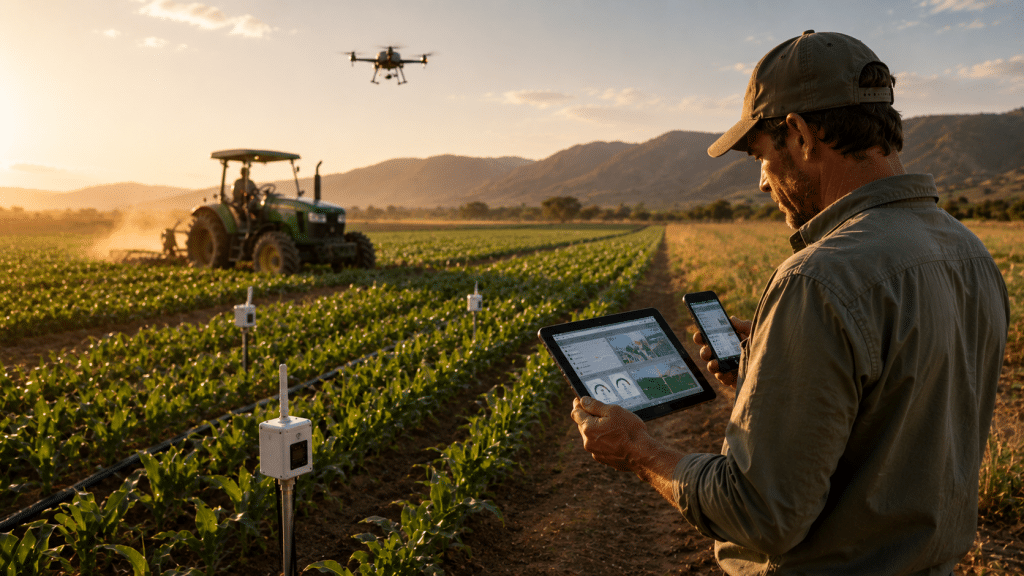
Small and medium-sized farms across South Africa are facing increasing financial pressure. Rising fertiliser costs, unpredictable weather conditions, water shortages, electricity instability, labour challenges, and shrinking profit margins are making it harder for farmers to remain competitive using traditional farming methods alone. Many smaller farming operations believe advanced agricultural technology is only accessible to massive commercial farms with enormous budgets. However, that perception is rapidly changing. Precision farming South Africa is becoming increasingly affordable, scalable, and practical for smaller agricultural businesses looking to improve efficiency and profitability.
Modern precision agriculture technology is no longer limited to large corporate farming operations. Affordable smart irrigation systems, soil moisture sensors, satellite crop monitoring, drone scouting, mobile farm management apps, and AI-driven analytics are now helping smaller farms reduce waste, improve crop performance, and strengthen operational control. Precision farming South Africa is becoming less about expensive machinery and more about smarter decision-making using accessible technology. Farmers who adopt even small precision agriculture improvements can often achieve measurable gains in water efficiency, fertiliser management, labour productivity, and long-term profitability.
Why Small and Medium Farms Face Growing Pressure
Agriculture in South Africa is becoming increasingly challenging for smaller farming operations.
Many farmers are dealing with:
- Rising fertiliser prices
- Water scarcity
- Electricity costs
- Climate variability
- Labour shortages
- Fuel inflation
- Soil degradation
- Increased operational risk
Unlike larger commercial farms, smaller operations often have tighter margins and fewer financial buffers.
This makes operational efficiency critically important.
Traditional farming inefficiencies such as water waste, over-fertilisation, delayed crop monitoring, and poor resource management can quickly reduce profitability.
Precision farming South Africa helps smaller farms operate more efficiently without necessarily requiring massive capital investment.
What Is Precision Farming?
Precision farming refers to the use of technology and real-time agricultural data to improve farming accuracy, efficiency, and productivity.
Instead of managing entire fields uniformly, precision agriculture systems identify variations within farming environments and optimise resource use accordingly.
Precision farming technologies may include:
- Smart irrigation systems
- Soil moisture sensors
- Satellite crop monitoring
- GPS-guided equipment
- Drone crop scouting
- AI crop analytics
- Mobile farm management apps
- Variable rate fertilisation
The goal is simple:
Apply the right resource, in the right amount, at the right place, at the right time.
This improves efficiency while reducing waste.
The Myth That Precision Farming Is Only for Large Farms
One of the biggest misconceptions in agriculture is that precision farming South Africa is only suitable for large commercial operations.
This belief often discourages smaller farms from exploring technologies that could improve profitability significantly.
Why This Myth Exists
Historically, precision agriculture systems were expensive and difficult to implement.
Large farms were typically the first adopters because they had:
- Bigger technology budgets
- Dedicated technical teams
- Larger operational scale
However, technology costs have decreased dramatically.
Modern cloud platforms, mobile apps, and affordable sensors are making precision farming accessible to smaller operations.
Precision Farming Is Becoming More Scalable
Today, farmers can start small and expand gradually.
Even basic precision agriculture tools can provide measurable benefits.
Small and medium farms can now adopt:
- Entry-level soil sensors
- Affordable drone services
- Smartphone-based farm apps
- Basic GPS systems
- Satellite monitoring subscriptions
Precision farming South Africa no longer requires a massive technology overhaul from day one.
Affordable Precision Agriculture Technologies That Actually Work
Smart Irrigation Systems
Water management is becoming one of the biggest challenges facing South African agriculture.
Traditional irrigation methods often waste significant amounts of water and electricity.
Affordable smart irrigation systems help smaller farms optimise water usage through:
- Automated scheduling
- Soil moisture monitoring
- Weather integration
- Remote irrigation control
Benefits of Smart Irrigation
- Reduced water waste
- Lower electricity costs
- Improved drought resilience
- Better crop health
- Reduced labour requirements
Even small irrigation improvements can significantly improve profitability over time.
Soil Moisture Sensors
Soil moisture sensors are one of the most cost-effective precision agriculture tools available.
These sensors measure moisture levels within the soil and help farmers irrigate more accurately.
Benefits of Soil Sensors
- Prevent overwatering
- Improve water efficiency
- Reduce pumping costs
- Improve crop performance
- Support smarter irrigation decisions
Affordable wireless sensors are becoming increasingly accessible for small and medium-sized farms.
Satellite Crop Monitoring
Satellite crop monitoring provides farmers with large-scale visibility into field conditions without requiring expensive infrastructure.
Modern satellite platforms help farmers identify:
- Water stress
- Nutrient deficiencies
- Uneven crop growth
- Irrigation problems
- Pest pressure
Why Satellite Monitoring Works for Smaller Farms
Satellite services are often subscription-based, making them more affordable than purchasing large equipment systems.
Farmers gain access to advanced crop intelligence without major upfront investment.
Drone Crop Scouting
Drone technology is becoming increasingly practical for smaller agricultural operations.
Farmers can either purchase entry-level drones or hire drone service providers when needed.
Drone Benefits
- Faster crop inspections
- Early stress detection
- Irrigation monitoring
- Crop mapping
- Pest and disease identification
Drone scouting reduces labour-intensive field inspections and improves operational visibility.
GPS Guidance Systems
GPS guidance improves equipment accuracy and operational efficiency.
Affordable GPS systems help reduce overlap during:
- Planting
- Spraying
- Fertiliser application
Benefits of GPS Farming Systems
- Reduced fuel usage
- Improved input efficiency
- Better crop consistency
- Lower operational waste
Even simple GPS guidance systems can generate measurable operational savings.
Mobile Farm Management Apps
Smartphone-based farm management apps are becoming increasingly valuable for smaller farms.
These apps help farmers manage:
- Irrigation schedules
- Crop records
- Input tracking
- Weather monitoring
- Operational planning
Advantages of Mobile Farm Apps
- Affordable implementation
- Easy accessibility
- Better record keeping
- Improved operational visibility
- Faster decision-making
Many smaller farms already have the smartphone infrastructure needed to begin using these systems.
How Precision Farming Improves Profitability for Smaller Farms
Precision farming South Africa improves profitability primarily through efficiency.
Smaller farms often operate with limited resources, making waste reduction extremely valuable.
Improved Resource Management
Precision systems help optimise:
- Water usage
- Fertiliser application
- Labour allocation
- Fuel consumption
Better Yield Consistency
Earlier problem detection improves crop protection and productivity.
Reduced Operational Waste
Precision agriculture reduces unnecessary spending on inputs and energy.
Improved Decision-Making
Real-time data improves operational planning and responsiveness.
Even moderate efficiency gains can significantly improve long-term farm profitability.
Reducing Water and Fertiliser Costs
Water and fertiliser represent major expenses for most farms.
Traditional farming methods often apply these resources inefficiently.
Smart Irrigation Reduces Water Waste
Precision irrigation systems apply water according to actual field conditions rather than fixed schedules.
Variable Rate Fertilisation
Precision farming South Africa allows more targeted fertiliser application based on soil conditions and crop needs.
This helps farmers:
- Reduce overapplication
- Improve nutrient efficiency
- Lower fertiliser costs
- Improve soil health
Reducing unnecessary input use improves profitability and sustainability simultaneously.
Improving Crop Monitoring and Early Detection
Many crop problems begin long before visible symptoms appear.
Traditional field inspections may detect issues too late.
Precision farming technologies improve visibility through:
- Satellite monitoring
- Drone scouting
- AI analytics
- Soil monitoring
Early Detection Helps Prevent
- Yield losses
- Irrigation failures
- Nutrient deficiencies
- Disease spread
- Pest outbreaks
Earlier intervention reduces operational risk and protects productivity.
Scalable Adoption Strategies for Small Farms
One of the biggest advantages of modern precision farming South Africa is scalability.
Farmers do not need to implement every technology simultaneously.
Start With High-Impact Areas
Smaller farms should prioritise technologies that address their biggest operational challenges first.
Examples include:
- Smart irrigation during drought conditions
- Soil sensors for water management
- Satellite monitoring for crop visibility
Expand Gradually
Once initial systems prove successful, farms can expand into additional technologies.
Focus on ROI
Farmers should prioritise systems that deliver measurable operational savings.
A phased implementation strategy reduces financial risk.
Common Mistakes to Avoid When Investing in Farming Technology
Some farms invest in technology without a clear operational strategy.
This can reduce return on investment.
Mistake 1: Buying Technology Without Clear Objectives
Farmers should identify operational problems before purchasing systems.
Mistake 2: Ignoring Training
Technology adoption works best when farmers understand how to use systems effectively.
Mistake 3: Overcomplicating Systems
Simple, practical solutions often deliver stronger ROI than overly complex systems.
Mistake 4: Failing to Integrate Data
Disconnected systems reduce efficiency and decision-making quality.
Mistake 5: Expecting Instant Results
Precision farming ROI often improves gradually over multiple growing seasons.
The Future of Affordable Precision Farming South Africa
Agricultural technology is becoming more accessible every year.
Future developments may include:
- Lower-cost AI analytics
- Affordable autonomous systems
- Improved satellite services
- Better mobile integration
- More scalable IoT devices
Precision farming South Africa will likely continue expanding rapidly as costs decrease and technology becomes easier to implement.
Smaller farms that adopt practical precision agriculture solutions early may gain important competitive advantages.
Why More Small Farms Are Adopting Smart Farming Technology
Small and medium-sized farms are increasingly recognising that precision agriculture is no longer a luxury.
It is becoming a practical business tool for improving operational efficiency and resilience.
Affordable precision farming technologies help smaller farms:
- Reduce waste
- Improve profitability
- Increase productivity
- Strengthen drought resilience
- Improve sustainability
- Gain better operational control
As operational pressures increase, efficiency improvements become more valuable.
Choosing the Right Precision Agriculture Partner
Successful implementation requires more than simply purchasing equipment.
Farmers need practical guidance and solutions tailored to local conditions.
A strong precision agriculture partner can help smaller farms:
- Prioritise investments
- Improve irrigation management
- Analyse crop performance
- Reduce operational waste
- Improve profitability
- Scale systems gradually
Local agricultural expertise remains essential for successful implementation.
Frequently Asked Questions
What is precision farming South Africa?
Precision farming South Africa refers to the use of technology and data-driven systems to improve agricultural efficiency, productivity, and resource management.
Is precision farming affordable for small farms?
Yes. Many precision agriculture technologies are becoming increasingly affordable and scalable for small and medium-sized farms.
What are the best entry-level precision farming technologies?
Popular starting points include smart irrigation systems, soil moisture sensors, satellite crop monitoring, and mobile farm management apps.
How does precision farming improve profitability?
Precision farming improves profitability by reducing waste, improving input efficiency, protecting yields, and strengthening operational decision-making.
Can smaller farms benefit from satellite monitoring?
Yes. Subscription-based satellite services provide affordable crop monitoring without requiring major infrastructure investment.
Is precision farming difficult to implement?
Modern systems are becoming increasingly user-friendly and scalable, making implementation easier than many farmers expect.
Conclusion
Small and medium-sized farms across South Africa are under increasing pressure to improve efficiency, reduce waste, and remain profitable in challenging agricultural conditions. Rising input costs, climate variability, water scarcity, and operational complexity are forcing farmers to rethink traditional farming methods.
Precision farming South Africa is no longer reserved for massive commercial operations with unlimited budgets. Affordable technologies such as smart irrigation systems, soil moisture sensors, satellite monitoring, drones, and mobile farm management apps are making precision agriculture increasingly accessible to smaller farms.
Even modest improvements in water efficiency, fertiliser management, crop monitoring, and operational control can generate significant long-term benefits.
Farmers who adopt scalable precision agriculture technologies today may be better positioned to improve profitability, strengthen sustainability, and compete successfully in the future agricultural economy.
Profarm Intelligence helps South African farmers implement affordable precision agriculture solutions tailored to local farming conditions. Whether your goal is improving water efficiency, reducing operational waste, protecting crop yields, or strengthening profitability, precision farming technology can help take your farming operation to the next level.