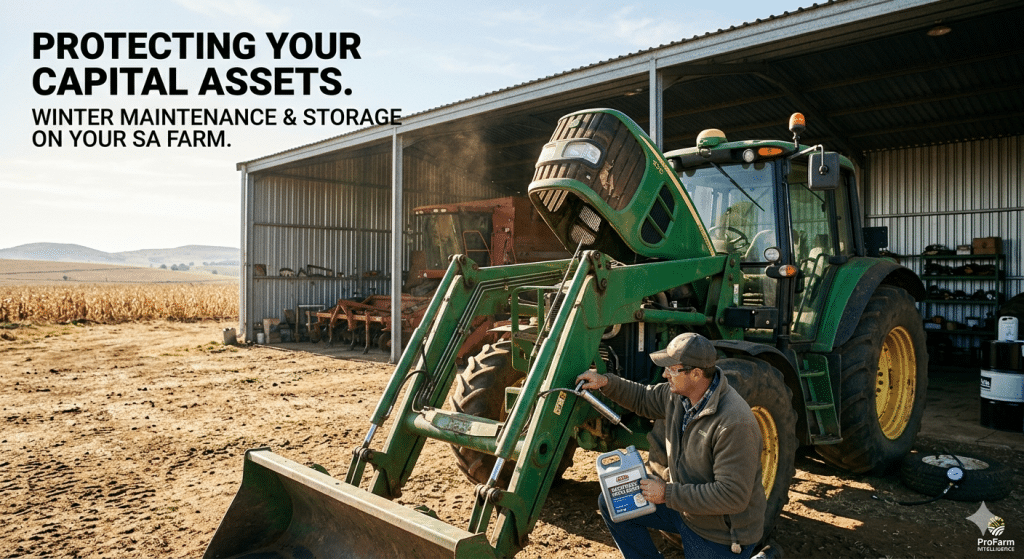
A quiet has settled over the vast expanses of dry maize stubble on the Gauteng Highveld, stretching toward the Pretoria horizon. The frenetic pace of harvest is complete. In many fields, the crops are in the silos, and for the commercial manager running a vetted, pre-owned machinery fleet, the focus must immediately pivot to protecting the capital assets that made that harvest possible. The strategic operator understands that proper winter storage is not just a seasonal task; it is the final step in ensuring the long-term Return on Investment (ROI) of their carefully sourced and financed assets.
Neglecting machinery storage and maintenance during the cool South African winter is expensive. Frost, moisture, corrosion, and pests do not discriminate based on the age of your machinery, but they have a particularly devastating impact on non-analog, complex modern systems retrofitted onto older iron. The ZAR cost of preventable failures—from seizing engines to destroyed precision ag electronics—can rapidly erase the financial advantages of running a reliable, vetted pre-owned fleet.
Here is a practical, step-by-step guide to winter maintenance and storage, designed to keep your reliable workhorses protected until spring.
The Deep Clean: Defeating Corrosion Before It Starts
Corrosion is the single greatest enemy of stored machinery. For equipment that has been actively engaged in tillage, planting with fertilisers, or infrastructure maintenance (as discussed in Post 4), dust and chemical residues are deeply embedded.
Action Plan:
- Remove All Residue: Thoroughly pressure-wash every machine in the fleet. Pay meticulous attention to areas where corrosive chemicals collect: seed bins on planters, fertiliser hoppers, the underside of tractor cabs, and the disc harrow assemblies.
- Clear the Vents: Clean all air vents and cooling packs on tractors and harvesters. Dust and chaff are excellent insulators; when they trap moisture, they accelerate rust.
- Inspect and repair: While the machinery is clean, perform a detailed inspection for paint damage or existing rust. Touch up any bare metal to prevent corrosion from spreading during the winter months.
Lubrication and Fluid Management: The Anti-Seize Strategy
A clean machine is a vulnerable machine if it is left dry. Water is insidious and will exploit any opportunity to cause seizing or internal component damage. Lubrication is your anti-seize strategy.
Action Plan:
- The Grease Blitz: Systematically grease every single pivot point on every piece of equipment in your storage facility. This includes the front-end loader attachments on your TLBs, all hydraulic cylinder pins, the steering knuckles of your tractors, and the auger systems in your harvesters. Fresh grease creates a powerful barrier that prevents moisture from entering these critical metal-on-metal joints.
- Check the Antifreeze: This is a non-negotiable step. In South Africa, especially in regions prone to frost like the Highveld, engine blocks can crack on exceptionally cold mornings. Check the concentration and freezing point of the antifreeze in every diesel engine in your fleet. Top up or flush and replace as necessary. A simple, inexpensive test can save a multi-million Rand engine rebuild.
- Address Winter Diesel: Diesel fuel will ‘wax’ or gel in sub-zero temperatures, clogging filters and preventing engines from starting on those crisp Gauteng mornings. If you will not be operating your fleet regularly in winter, ensure your remaining fuel is either treated with a winter additive or that your bulk storage contains winter-grade diesel. Maintain a full tank to minimize condensation in the tank during temperature fluctuations.
- Clean Fluid Storage: As visualized in our maintenance bay, bulk oil barrels and winter additive containers must be sealed, clean, and stored properly to ensure no contamination occurs before use.
Battery and Electrical Care: Protecting Sensitive Tech
Modern farming relies on complex electrical systems. The vetted pre-owned tractors we operate are robust, but they often feature retrofitted upgrades (like the precision ag dome on the cab roof from Post 2). These components are highly sensitive to voltage drops and deep discharge.
Action Plan:
- Remove and Store Batteries: Batteries lose charge rapidly in the cold. To maximize their lifespan, remove them from all infrequently used machinery. Store them in a cool, dry, and ventilated area.
- The Trickle Charge: Periodically connect stored batteries to a smart ‘trickle charger’ or battery maintainer. Deep discharge can permanently damage a battery and requires expensive ZAR replacement.
- Remove the Precision Ag Tech: This is a critical step for the modern fleet manager. The expensive, retrofitted digital components—specifically the GPS receivers and the universal ISOBUS screens discussed in Post 2—must be removed before storage. These electronics do not handle temperature fluctuations and dust well. Store them in a secure, climate-controlled office environment to prevent environmental damage and theft.
Tyre and Structure Care: Preventing Degradation
Tyres are a significant capital investment. When machinery sits idle for months, tyres must be managed to prevent damage.
Action Plan:
- Lift the Load: Whenever possible, use jacks or stable blocking to lift the weight of the machine off the tyres. This prevents flat spots, which cause dangerous vibration when operation resumes.
- Tyre Management: If lifting is not possible, clean the tyres of all mud and verify they are inflated slightly above the normal operating pressure specified for the task (referencing Post 3). Check tyre pressure periodically throughout the winter.
- UV and Moisture protection: Store machinery on a concrete pad rather than on bare soil to minimize moisture transfer. Keep mechanisation shielded from direct UV exposure (inside the shed) as UV light degrades rubber compounds.
Optimizing Storage Facilities: A Profit Center for Protection
A storage facility is not just a building; it is a critical component of asset protection. A basic, well-maintained shed is a profit center that prevents loss.
Action Plan:
- Ventilation and Shed Maintenance: Ensure your storage facility is well-ventilated to prevent moisture buildup and condensation. The galvanised steel shed structure, visualized in Post 6, should be inspected for leaks or open gaps before heavy rain or wind.
- Rodent Control: This is a vital, often overlooked issue for stored machinery. Rodents seek shelter in the cold and will cause catastrophic damage by chewing through wiring harnesses inside cabs and engine bays. Implement a robust rodent baiting and trapping program inside and around your storage shed before the mechanisation moves in. Keep area surrounding storage clean and clear of weeds.
Conclusion: The ROI of Preventative Care
ProFarm Intelligence values the rigorous process we established in Post 1, where every pre-owned asset in our inventory is inspected, vetted, and financed. Protecting that investment through winter is the final step in ensuring that the vetted, reliable fleet we have assembled continues to deliver its maximized ROI. The time and small ZAR resources invested in proper cleaning, fluid management, antifreeze, winter-grade diesel, protecting sensitive precision ag tech, tyre care, and shed optimization are minimal compared to the costs of preventable mechanical and electrical failures.
Preventative winter maintenance is not optional; it is a critical management practice that ensures your carefully sourced, high-performing pre-owned fleet is protected, retains its long-term value, and is ready for flawless operation when spring planting begins. Continue managing your assets with diligence, and explore the vetted machinery on ProFarm Intelligence marketplace to find the next reliable addition to your well-maintained fleet.