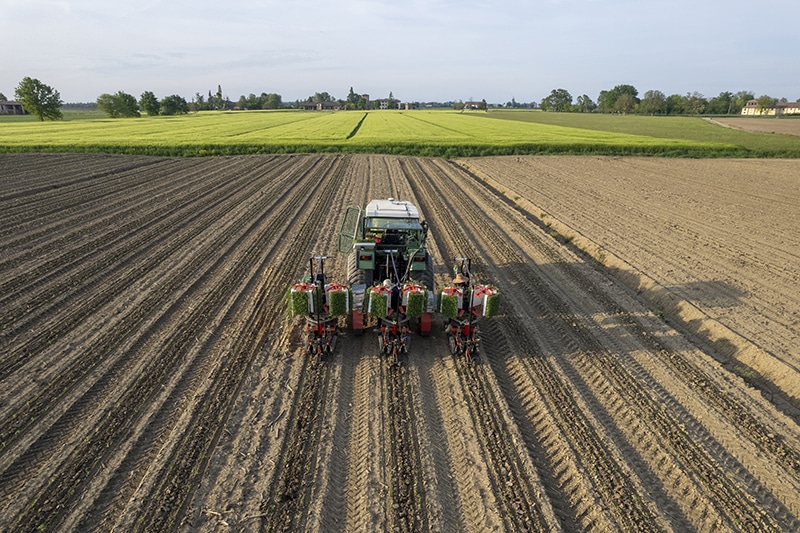
Soil compaction represents a mechanical failure of the agrosystem, directly degrading the Gross Margin Return on Investment (GMROI) of any commercial crop operation. In South Africa’s high-clay regions, such as the Free State or the heavy turf soils of the Springbok Flats, selecting the wrong tillage implement accelerates this physical degradation. Every pass with an implement applies downward force and shear stress. If the machinery deployed does not match the soil’s mechanical threshold, the resulting compaction restricts yield potential long before the first seed is planted.
The Mechanics of Bulk Density and Root Penetration
When agricultural soil is subjected to heavy mechanical loads, its bulk density increases. High bulk density fundamentally alters the soil architecture by crushing macropores—the primary conduits for oxygen exchange and water infiltration.
In heavy clay soils, which inherently possess higher moisture retention and plasticity, this structural collapse is severe. Crop root systems operate under strict physical limits. For primary South African row crops like maize and soya, roots cannot effectively penetrate soil horizons where penetration resistance exceeds 2.5 to 3.0 MPa. As bulk density rises, the physical energy required for root elongation increases exponentially, stunting early-stage growth and leaving the plant highly vulnerable to mid-season drought stress.
Implement Contact Pressure: Axle Load vs. Ground Pressure
Evaluating the impact of machinery requires separating two distinct physical metrics: surface contact pressure and total axle load.
Surface compaction (the top 0–150mm) is primarily driven by ground contact pressure. This is a function of the implement’s weight distributed across its ground-engaging components, such as disc blades or gauge wheels. Subsoil compaction (depths exceeding 200mm) is a direct function of total axle load and draft requirement. Heavy, poorly calibrated implements require massive tractor units to pull them through clay soils, compounding the deep axle load.
Selecting an implement that optimizes the power-to-weight ratio minimizes the need for excessive ballast, directly reducing the depth of the compaction stress bulb transmitted through the soil profile.
Comparative Tillage Implement Analysis (Discs vs. Deep Rippers)
Addressing high-clay soil mechanics requires a strategic approach to implement selection, often balancing residue management against deep profile fracturing.
A heavy offset disc is highly effective at sizing dense crop residue and mixing the upper soil profile. By utilizing the weight of the implement across the concavity of the discs, it aggressively chops organic matter. However, continuous use of a disc harrow at uniform depths on clay soils causes shearing at the base of the cut, inevitably forming a highly restrictive plow pan.
To break this pan, a deep ripper (or subsoiler) is required. Unlike a disc, a ripper does not invert or heavily mix the topsoil. Instead, the tines are designed to operate below the compacted layer, leveraging lifting action to shatter the hardpan and restore vertical drainage. Ripping requires massive draft power and applies extreme stress to both the tractor and the implement frame, making the structural integrity of the ripper paramount.
Technical Tillage Implement Comparison
| Implement Type | Optimal Soil Condition | Max Penetration Depth (mm) | Compaction Risk Level | Primary SA Use Case |
|---|---|---|---|---|
| Heavy Offset Disc | Dry to moderate moisture | 100 – 150 | High (Plow pan creation) | Sizing heavy maize/wheat residue; primary mixing. |
| Tine Cultivator | Friable, well-drained | 150 – 250 | Moderate | Seedbed preparation; weed control; fertilizer incorporation. |
| Deep Ripper | Dry, highly compacted | 400 – 600 | Low | Shattering deep hardpans; restoring vertical drainage. |
| Mouldboard Plough | Moderate moisture, weed-heavy | 200 – 300 | High | Total topsoil inversion; burying resistant weed banks. |
Mitigating Risk in the Pre-Owned Market
The mechanical stress of engaging heavy clay soils transfers directly from the ground engaging tools into the implement’s frame, shanks, and hydraulic systems. In the secondary machinery market, this creates massive asymmetric information risk. Buying a pre-owned ripper or heavy disc with undiscovered micro-fractures, warped gang axles, or fatigued weldments guarantees catastrophic failure during critical operational windows.
This is where the signaling theory of asset acquisition becomes relevant. Unverified classified listings carry a high probability of structural fatigue. Purchasing vetted, agent-inspected tillage equipment from ProFarm Agri neutralizes this capital risk. By enforcing a rigorous physical inspection protocol, ProFarm ensures that the mechanical integrity of the implement matches its economic valuation, protecting the buyer’s balance sheet and ensuring the machinery is structurally capable of handling South Africa’s toughest soil conditions.