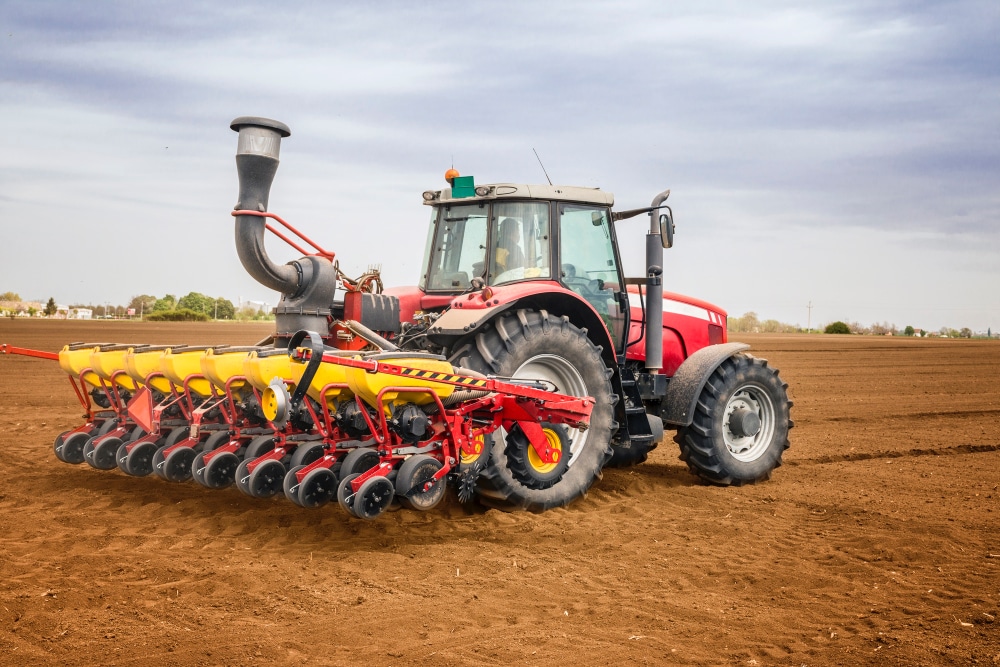
A commercial grain farmer in the Free State sits down before planting season to review operational costs for the coming year. Diesel prices remain volatile. Fertilizer input costs are still elevated. Labour expenses continue rising. Insurance premiums have increased again. Meanwhile, the monthly repayments on financed machinery have climbed sharply following recent South African interest rate movements.
Now comes the difficult question.
Should the farm proceed with upgrading an aging tractor fleet, hold onto older machinery for another season, or liquidate underutilized equipment to reduce debt exposure?
This is the reality many South African farming operations face today.
Interest rate shifts affect far more than monthly finance repayments. They influence machinery purchasing behaviour, equipment resale values, operational flexibility, fleet modernization strategies, and overall business risk exposure.
In modern agriculture, machinery fleet strategy has become a critical financial and operational discipline rather than simply an equipment management exercise.
The difference between a resilient farming operation and a financially strained one often comes down to how effectively machinery assets are managed during changing economic cycles.
As financing costs rise, more farmers are reassessing:
- Fleet utilization
- Capital exposure
- Equipment replacement timing
- Maintenance strategies
- Used machinery opportunities
- Agricultural asset disposal decisions
Understanding how interest rate cycles influence agricultural machinery decisions can help farming businesses remain operationally efficient while protecting long-term sustainability.
The New Economic Reality Facing South African Agriculture
South African agriculture operates within one of the most volatile business environments in the economy.
Farmers face pressure from:
- Interest rate fluctuations
- Currency volatility
- Weather uncertainty
- Rising fuel costs
- Import-driven equipment inflation
- Labour increases
- Commodity cycle instability
Machinery ownership costs have escalated dramatically over the past decade.
Modern commercial farming equipment represents a major capital commitment, often financed over extended periods. As interest rates increase, the total ownership cost of agricultural machinery rises significantly.
This is why machinery fleet strategy has become increasingly important for commercial farming South Africa operations.
Instead of automatically replacing equipment every few years, many operators now focus on:
- Fleet optimization
- Utilization tracking
- Asset rationalization
- Operational efficiency
- Flexible machinery ownership structures
At the same time, online agricultural machinery auctions and digital farm equipment marketplaces are creating new opportunities for buyers and sellers to manage machinery exposure more strategically.
Why Interest Rates Matter in Agriculture
Agriculture is especially sensitive to financing conditions.
Unlike many industries, farming businesses often operate with:
- Seasonal income cycles
- High upfront input costs
- Long production timelines
- Weather-related uncertainty
- Capital-intensive infrastructure
This creates significant dependence on operational financing.
How Interest Rates Affect Agricultural Financing
When South African interest rates rise, several financial pressures increase simultaneously.
Higher Monthly Repayments
Variable-rate machinery loans become more expensive immediately.
Increased Operational Borrowing Costs
Production financing for:
- Seed
- Fertilizer
- Chemicals
- Fuel
also becomes more expensive.
Reduced Equipment Affordability
Higher rates reduce purchasing power.
Farmers may qualify for:
- Smaller finance amounts
- Shorter repayment terms
- Higher deposit requirements
Greater Cash Flow Pressure
Seasonal cash flow becomes tighter, especially during:
- Drought cycles
- Weak commodity markets
- Delayed harvests
This is why machinery fleet strategy cannot be separated from broader financial planning.
Long-Term Machinery Loans and Agricultural Cycles
Agricultural machinery is often financed over extended periods because of its high capital cost.
However, farming income cycles remain unpredictable.
A tractor financed during strong commodity conditions may become significantly harder to justify if:
- Interest rates increase
- Input costs rise
- Commodity prices weaken
This creates pressure to reassess machinery ownership structures continuously.
How Higher Interest Rates Change Machinery Buying Behaviour
As financing conditions tighten, buyer behaviour changes rapidly.
The agricultural machinery market responds directly to shifts in affordability and risk tolerance.
Delayed Equipment Upgrades
One of the first changes farmers make is postponing machinery replacement cycles.
Instead of replacing equipment every few years, operators often:
- Extend ownership periods
- Increase maintenance spending
- Delay fleet expansion
Increased Demand for Used Machinery
Higher new-equipment financing costs push more buyers toward:
- Used tractors South Africa marketplaces
- Pre-owned agricultural equipment
- Agricultural machinery auctions
- Online farm auctions
The goal becomes reducing capital exposure while maintaining operational capacity.
Reduced Appetite for Aggressive Expansion
During lower-rate environments, farms often expand aggressively through financed machinery purchases.
Higher rates typically shift focus toward:
- Efficiency optimization
- Risk management
- Debt reduction
- Operational resilience
The Shift From “Growth Buying” to “Efficiency Buying”
This change in psychology is important.
Instead of buying machinery to increase scale rapidly, farmers increasingly purchase equipment based on:
- Fuel efficiency
- Reliability
- Maintenance cost
- Utilization rates
- Downtime reduction
This transforms machinery fleet strategy into a productivity-focused discipline.
The Rise of the Used Machinery Market in South Africa
As financing pressure increases, the used machinery market becomes increasingly active.
South African farmers are turning toward:
- Used tractors South Africa listings
- Digital agricultural marketplaces
- Auction platforms
- Contractor fleet liquidations
to secure lower-cost operational assets.
Why Buyers Seek Lower Capital Exposure
Pre-owned agricultural equipment offers several advantages during tighter economic cycles.
Lower Purchase Costs
Used machinery reduces upfront capital requirements.
Reduced Depreciation Exposure
The steepest depreciation often occurs during early ownership years.
Greater Flexibility
Lower capital exposure improves operational adaptability during uncertain seasons.
Faster Return on Investment
Used machinery may generate quicker payback periods if acquired strategically.
Why Inspection Transparency Matters More During Tight Cycles
As buyers become more cautious, machinery condition becomes increasingly important.
Farmers want:
- Inspection reports
- Maintenance histories
- Operational transparency
- Service documentation
- Accurate valuation data
This explains why professionally inspected equipment often performs better in agricultural machinery auctions during uncertain economic periods.
Buyer Psychology During High-Rate Environments
When financing becomes expensive, buyers become:
- More analytical
- More risk-sensitive
- More maintenance-focused
- More value-driven
Impulse buying declines significantly.
When Should Farmers Upgrade Machinery Despite Higher Rates?
Higher financing costs do not automatically mean machinery upgrades should stop completely.
In some situations, replacement remains the financially smarter decision.
Excessive Downtime Costs
Older equipment can create serious operational bottlenecks during critical seasonal windows.
Breakdowns during:
- Planting
- Harvesting
- Spraying
may cost more than finance repayments on newer machinery.
Rising Repair Costs
There comes a point where escalating maintenance costs become economically unsustainable.
Frequent repairs can create:
- Labour inefficiencies
- Delayed field operations
- Seasonal risk exposure
- Cash flow instability
Fuel Inefficiency
Older tractors often consume substantially more fuel.
In high-diesel-cost environments, fuel savings alone may justify machinery replacement.
Precision Agriculture Integration
Modern equipment increasingly supports:
- GPS guidance
- Variable-rate application
- Data-driven management
- Labour optimization
For some operations, these productivity improvements offset higher financing costs.
Cost-Per-Hectare Thinking
Smart machinery fleet strategy focuses on operational efficiency rather than purchase price alone.
A more expensive machine may still lower:
- Cost per hectare
- Labour requirements
- Downtime risk
- Fuel consumption
Real-World Operational Examples
Grain Farming
Delayed planting caused by unreliable equipment can reduce yields significantly.
Sugarcane Operations
Harvest delays may impact cane quality and transport scheduling.
Livestock Farming
Loader or feed equipment downtime disrupts daily operational consistency.
Mixed Farming Businesses
Versatile machinery reliability becomes especially important where operational diversity exists.
When Holding Older Equipment Becomes Financially Dangerous
Some farmers delay machinery replacement purely to avoid additional debt.
However, this strategy can become risky.
Deferred Maintenance Risk
Older machinery often requires increasingly expensive maintenance interventions.
Deferred repairs may eventually lead to:
- Major component failures
- Engine rebuilds
- Transmission replacements
Catastrophic Breakdown Exposure
Unexpected breakdowns during critical operational periods create:
- Revenue disruption
- Contractor dependency
- Seasonal delays
Spare Parts Availability Problems
Older equipment may suffer from:
- Long parts lead times
- Discontinued components
- Imported replacement delays
Seasonal Downtime Risk
A single breakdown during planting season can create major productivity losses.
Declining Resale Value
Waiting too long to liquidate machinery often reduces:
- Trade-in value
- Auction performance
- Buyer interest
This is why machinery fleet strategy should include planned lifecycle management rather than reactive liquidation.
Why Pre-Owned Equipment Becomes Strategic During Tight Cycles
Pre-owned agricultural equipment often becomes highly strategic during higher-rate environments.
Reduced Capital Exposure
Used machinery allows farms to preserve liquidity.
Lower Depreciation Pressure
Second-hand equipment has often already absorbed its steepest depreciation curve.
Faster ROI Potential
Used machinery can achieve:
- Quicker operational payback
- Better short-term efficiency gains
- Improved capital utilization
Mixed-Age Fleet Strategies
Many successful farms operate blended fleets combining:
- Older support equipment
- Newer high-utilization machinery
- Contractor partnerships
This balances capital efficiency with operational reliability.
Auction Opportunities During Tight Markets
Economic pressure often creates opportunities through:
- Fleet liquidations
- Downsizing sales
- Contractor restructuring
- Agricultural machinery auctions
Buyers with strong liquidity positions may secure quality assets below replacement cost.
Why Professional Inspections Matter More
During uncertain cycles, inspection quality becomes critical.
Buyers want assurance regarding:
- Mechanical condition
- Maintenance quality
- Operational reliability
This improves confidence during online farm auctions.
How Interest Rate Cycles Influence Machinery Resale Value
Interest rates also affect sellers directly.
Reduced Buyer Appetite
Higher financing costs reduce the pool of aggressive buyers.
This places downward pressure on:
- Premium machinery pricing
- Expansion-driven purchases
- Luxury equipment upgrades
Stronger Auction Activity During Liquidation Cycles
Economic pressure often increases:
- Fleet rationalization
- Contractor exits
- Asset disposal activity
This can create more active auction markets.
Market Psychology Shifts
Buyer sentiment changes during high-rate periods.
Purchasing decisions become:
- More cautious
- More analytical
- More maintenance-focused
Regional Demand Fluctuations
Machinery demand may vary depending on:
- Rainfall conditions
- Commodity performance
- Regional crop cycles
Timing becomes increasingly important when selling agricultural assets.
Fleet Optimization Strategies Smart Farmers Use During High-Rate Environments
Experienced operators often focus on optimization rather than expansion.
Machinery Utilization Tracking
Successful farms monitor:
- Hours worked
- Idle time
- Seasonal utilization
- Operational efficiency
Underutilized machinery becomes a financial liability.
Removing Surplus Assets
Selling redundant equipment improves:
- Cash flow
- Maintenance efficiency
- Capital flexibility
Contractor Outsourcing
Some farms reduce ownership costs by outsourcing:
- Harvesting
- Spraying
- Specialized fieldwork
Preventative Maintenance
Preventative servicing becomes increasingly important when replacement cycles extend.
Equipment Sharing Models
Neighbouring operations sometimes collaborate on:
- Shared machinery ownership
- Seasonal utilization balancing
Refinancing Reviews
Farmers periodically reassess:
- Interest structures
- Repayment terms
- Asset exposure
Balancing Owned vs Hired Machinery
The optimal machinery fleet strategy often combines:
- Owned core equipment
- Seasonal contractor support
- Flexible operational scaling
Why Digital Agricultural Auctions Are Growing During Economic Pressure
Digital agricultural marketplaces continue expanding because they improve market efficiency.
Broader Buyer Access
Online platforms connect:
- Farmers
- Contractors
- Dealers
- Agribusiness buyers
across South Africa.
Lower Acquisition Costs
Online farm auctions often provide:
- Competitive pricing
- Faster transactions
- Value opportunities
Transparent Pricing Discovery
Competitive bidding reveals realistic market value more efficiently.
Faster Liquidity for Sellers
Digital auctions help sellers release capital quickly when needed.
Remote Participation
Farmers can participate without travelling across provinces.
Improved Capital Efficiency
Digital marketplaces improve:
- Asset turnover
- Buyer discovery
- Operational flexibility
Inspection-focused listings help reduce buyer uncertainty significantly.
How ProFarm Agri Supports Smarter Machinery Decisions
ProFarm Agri supports agricultural machinery transactions through transparent, inspection-focused digital marketplaces.
In uncertain economic conditions, buyers and sellers increasingly value:
- operational transparency
- professional inspections
- structured valuations
- nationwide visibility
Through:
- machinery auctions
- fixed-price listings
- inspection reporting
- valuation-driven listings
ProFarm Agri helps farming businesses approach machinery decisions more strategically.
This supports improved confidence during:
- equipment acquisition
- fleet restructuring
- agricultural asset disposal
Conclusion
South African agriculture continues operating within a highly dynamic financial environment where machinery ownership decisions carry increasing operational consequences.
Interest rate shifts affect far more than finance repayments.
They influence:
- machinery purchasing behaviour
- resale markets
- operational efficiency
- fleet modernization
- capital exposure
- long-term sustainability
A strong machinery fleet strategy helps farming businesses remain flexible, resilient, and operationally efficient during uncertain economic cycles.
For some farms, this may mean:
- delaying expansion
- optimizing existing fleets
- purchasing quality used machinery
- reducing underutilized assets
For others, strategic upgrades may still improve productivity enough to justify higher financing costs.
The key is making disciplined, data-driven decisions rather than reactive emotional purchases.
As online farm auctions and digital agricultural marketplaces continue growing across South Africa, farmers now have more flexibility than ever when managing agricultural machinery assets.
To explore professionally inspected machinery opportunities, transparent agricultural auctions, and strategic asset disposal solutions, visit ProFarm Agri and build a machinery strategy aligned with today’s economic realities.